Ellen Allen: From WV to DC: Awarning about health care (Opinion)
This Op-Ed was originally published in the Charleston Gazette-Mail on February 14, 2026
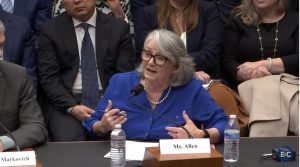
Last month, I had the rare privilege of testifying before the health subcommittee of the United States House Energy and Commerce Committee. I arrived at the Rayburn Building on Capitol Hill early that morning to prepare for one of the most meaningful acts of civic advocacy an American can undertake: sharing personal testimony about my experience navigating our health care system.
I testified in my personal capacity as a consumer who purchases insurance, thanks to the Affordable Care Act, through Healthcare.gov. But in a deeper sense, I was there representing thousands of West Virginians whose access to affordable coverage depends on the same law.
My testimony was necessary because those we have sent to Washington to improve our lives have too often failed West Virginians on health care.
Seated beside me were the CEOs of several of the nation’s largest insurance companies, including United Health Group; CVS Health; Elevance Health; The Cigna Group; and Ascendiun. Listening during the hearing, I came away with mixed impressions. Some members of Congress appeared genuinely committed to making care more affordable and accessible. Others seemed more focused on relitigating the politics of the Affordable Care Act and casting insurers as the sole villains.
To be clear, I am not presenting health insurance companies as champions of affordable care. They are corporations operating within a system that rewards profit maximization. While a few executives expressed interest in improving care and access for patients, most of the discussion centered on business operations rather than the lived experiences of the people those systems are supposed to serve.
What struck me most was not the behavior of the companies, but the broader failure of our elected officials to deliver an affordable health care system. Congress has the power to fundamentally restructure and reimagine American health care. Too often, it lacks the political will to do so.
The significance of the ACA, and government inaction
The Affordable Care Act — paired with tax credits and subsidies — brought the U.S. closer to affordable, accessible and near-universal coverage than ever before. It stands as one of the most significant policy achievements of our time. Yet Republicans have voted more than 60 times to repeal it without offering a viable replacement and continue to undermine it.
That is why I testified. Without the ACA, I — and thousands of West Virginians — would lose access to health insurance. When enhanced premium tax credits expired, my monthly premium, like that of many West Virginians, increased by more than 300%.
My experience at the hearing underscored a sobering reality: there is no serious, sustained bipartisan effort to control health care costs. Meanwhile, major insurers are rapidly consolidating power through vertical integration, transforming themselves into sprawling health care conglomerates.
Vertical integration means that a single corporation controls multiple layers of the health care system. CVS Health is a prime example: it owns the insurer Aetna, the pharmacy benefit manager Caremark and a nationwide chain of retail pharmacies. This concentration of control has real consequences for patients.
It can lead to higher drug prices, fewer choices and less transparency. The current system is designed to extract maximum revenue, not to prioritize the health and well-being of everyday Americans. Companies promise that integration will streamline services and reduce costs, but those savings too often flow to executive bonuses, shareholder returns, and further acquisitions that limit competition.
Integrated insurers increasingly determine which medications are covered, where prescriptions can be filled, and what prior authorizations or even denials patients must navigate. They frequently steer consumers toward their own affiliated services, even when independent competitors may offer lower costs. The result is diminished transparency, restricted choice, and reduced control over our own care.
As I stated in my testimony, government inaction effectively picks winners and losers in this system — and too often, ordinary Americans are the ones who lose. It is time for those we send to Washington to confront this reality and commit to building a health care system that serves people first.
Ellen Allen is executive director of West Virginians for Affordable Health Care.